
Typical Fuel Consumption by Machine Size
The honest answer: excavator fuel consumption varies widely depending on machine size, application, and operator behavior. Here are the real-world ranges:
| Machine Class | Operating Weight | Engine Output | Fuel Use |
|---|---|---|---|
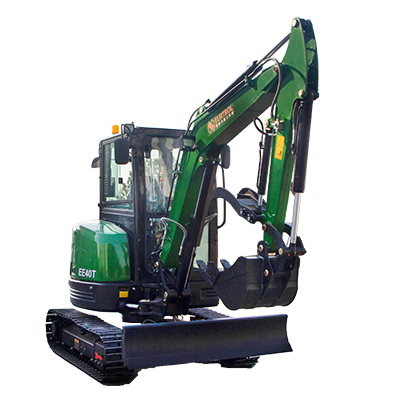
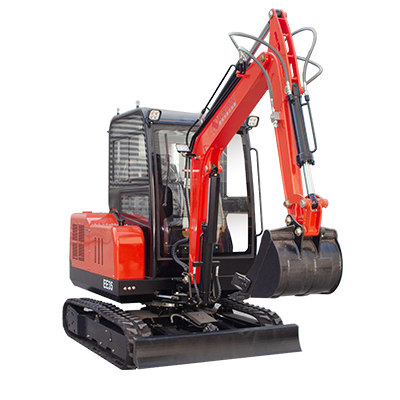
| Mini / compact excavator | 1.5T – 6T | 15–50 kW | 2–8 L/hr |
| Small excavator | 6T – 15T | 50–100 kW | 5–10 L/hr |
| Medium excavator | 15T – 30T | 100–200 kW | 10–18 L/hr |
| Large excavator | 30T+ | 200 kW+ | 18–25 L/hr |
Example: A well-maintained 6-ton mini excavator doing standard earthmoving will burn roughly 3 L/hr at idle and up to 8 L/hr under full load. The same machine running a hydraulic breaker continuously can push toward the upper end of that range.
What Actually Moves the Needle
Knowing the baseline numbers matters less than understanding what pushes fuel consumption up — or keeps it down.
Application type has the biggest impact. Breaker work typically runs 20–30% higher fuel consumption than digging the same number of hours, because the hydraulic system is under sustained high-pressure load with no relief cycle. Intermittent stop-start work (common in urban utility projects) burns around 15% more than continuous-cycle operations.
Idle time is the most underappreciated fuel drain on job sites. Five minutes of unnecessary idling burns roughly the same fuel as ten minutes of productive digging. On compact excavators with small tanks, this adds up fast across a workday. If you're stopping for more than three minutes, shut it down.
Operator technique accounts for more variation than most owners expect. Aggressive throttle inputs — rapid acceleration and hard stops — increase consumption by 8–12%. Smooth, deliberate operation isn't just easier on the machine; it directly reduces your fuel bill.
Altitude matters for turbocharged machines. At high elevation (thin air), turbo engines compensate by injecting more fuel, which can increase consumption by 10–15% compared to sea-level performance.
Calculating Your Real Cost Per Unit
Fuel burn per hour is useful, but fuel cost per cubic meter moved gives you a more meaningful efficiency metric for earthmoving:
Unit fuel cost = (L/hr) ÷ (m³/hr)
For example: a mini excavator burning 6 L/hr while moving 40 m³/hr costs 0.15 L per cubic meter. Use this figure to compare machine performance across different operators, projects, or conditions — a spike in unit cost is often the first sign of a developing mechanical issue or deteriorating operator habits.
Four Ways to Keep Consumption Down
1. Match bucket size to material. An oversized bucket in hard clay forces the engine to work harder than necessary. Right-sizing the attachment to the application is one of the easiest efficiency wins on a mini excavator.
2. Service air and fuel filters on schedule. A clogged air filter alone can increase fuel consumption by 5–10% — the engine compensates for restricted airflow with richer fueling. Check the filter indicator daily on dusty sites.
3. Use the correct fuel grade and DEF fluid. On Tier 4 / Stage V machines, running low-quality diesel or neglecting the diesel exhaust fluid (DEF) level triggers derate modes that cut power and increase fuel use simultaneously.
4. Warm up properly, then work. A cold engine running at full load burns more fuel and wears faster. Two to three minutes at low idle before loading the machine costs almost nothing and pays back in efficiency and engine longevity.
What This Means When Buying
Fuel consumption figures in a spec sheet are measured under controlled conditions — real-world numbers will be higher. When evaluating a mini excavator purchase, ask the dealer for:
Rated fuel consumption at full load (not just rated power)
Idle fuel consumption figures
Any available eco-mode or automatic idle-down features
These details tell you far more about long-term operating costs than horsepower numbers alone.