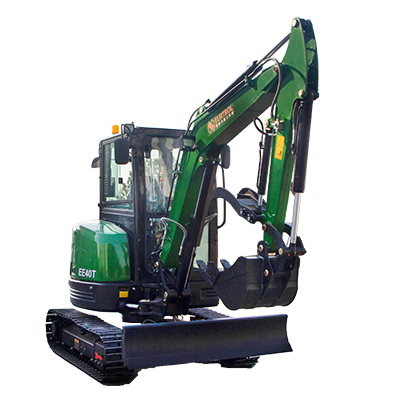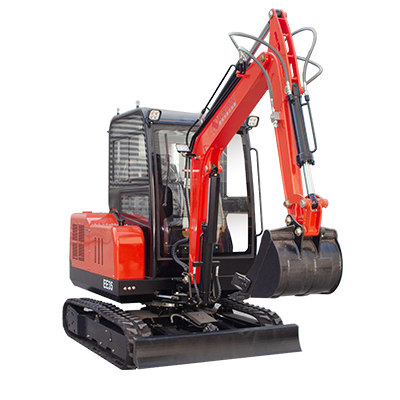

Round holes look simple until you try to cut one. Here's the technique that saves rework.
Tree pits, foundation pads, and drainage sumps all demand circular excavation. Without straight edges to guide you, accuracy depends entirely on method. This guide covers the proven 5-step approach for cutting clean, precise circular holes with a mini excavator.
Step 1: Mark Your Reference Points
Before starting the machine:
- Drive a stake at the exact center of the intended hole
- Mark the radius with spray paint or a string line pulled from center
- Add intermediate marks every 45 degrees for larger diameters
These marks are your only visual guide from the cab. Precision here prevents costly rework later.
Step 2: Position for Full Reach
Park offset from center by roughly half the hole diameter. Key points:
- Boom must cover the full radius without machine repositioning
- Tracks parallel to the work area edge
- Level, stable footing — any tilt translates to wall irregularity
Pro tip: Lay timber mats on soft ground before starting. Stopping mid-cut to reposition destroys accuracy and rhythm.
Step 3: Cut Center-Out in Concentric Passes
Working from solid ground outward keeps the machine stable and provides a consistent depth reference throughout.
Step 4: Shape and Trim the Walls
Switch to refinement mode:
- Use bucket teeth or side plate to scrape along marked perimeter
- Light, repeated passes— refine shape, don't remove bulk
- Check against spray marks after every few passes
Pivot technique: Plant the bucket at center and swing the machine body, using the boom arc to scribe a perfect circle. Works exceptionally well on mini excavators with smooth hydraulic control.
For structural applications (footings, tank bases), verify against drawings before the machine leaves site.
Common Mistakes
- Repositioning mid-cut: Changes the hole center. Plan reach before starting.
- Over-digging the center:Your depth reference. Cut precisely.
- Rushing trim passes: Accuracy lives here. Slow, controlled movements win.
Why Mini Excavators Excel at This
For holes up to 2m diameter and 1.5m depth, compact excavators (1.5T–6T) often outperform larger machines. Tighter swing radius and finer hydraulic control enable precision work close to obstacles. The same technique scales up — you just need sufficient boom reach to cover the radius from one position.
Need precision equipment for your project?